The Poor Committee
By Ruth Travis
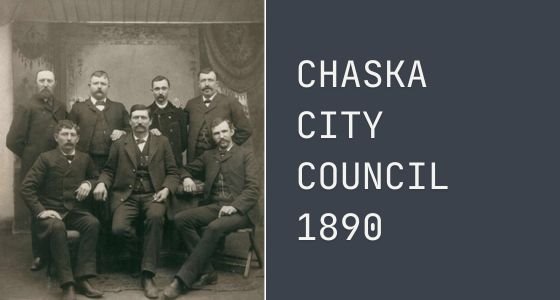
Once upon a time, in a quaint rural setting along the banks of the Minnesota River, first the rural Town of Chaska, then the Village of Chaska, and eventually a newly elected and burgeoning 1891 Chaska City Council dedicated themselves to establishing official and effective governance. Without a doubt, they made mistakes. They instituted, amended, and rescinded ordinances. They established policies for the good of all and were sometimes hard-pressed to convince their own neighbors to comply. Growing pains were evident. But in reading the Town, Village, and City Council Minutes through those early decades, I also see the caring and compassion these leaders believed to be integral to the heart and soul of their community.
Despite having first been taken aback by the assigned name, I was intrigued by the expense reports of “the Poor Committee.” Monthly, the Council reviewed the expenditures accrued by the Poor Committee and occasionally directly discussed the needs of certain persons. They approved and never refused payment of the Poor Committee’s expenditures. Frequent items billed by local merchants with the blessing of the Poor Committee included, but were not limited to, rent and housing, firewood, coal and fuel oil, home repairs and heater or stove replacement, groceries, produce and milk deliveries, medicine, medical supplies and sundries, doctor visits, hospital stays including transportation to and from medical facilities as well as home care nursing, water and light bills, clothing, and occasionally end of life care, including “laying out the body,” coffins, burial ground, and the burial. Each of these individual situations and extenuating circumstances was reviewed and attended by the citizens appointed to the Poor Committee.
Not everyone who appealed to The Poor Committee was afforded support. Cases were carefully considered. Some were denied and those actions were reported as well, in which case the minutes reflect “not entitled to relief.” The Poor Committee was not to be duped or taken for granted. However, the City Council Minutes also report the Poor Committee to have provided services defined as “Emergency Relief” to “displaced persons” or “paupers” or “transient families” and occasionally included wording as vague as “Care for self and family” without discussion or question.
In an effort to be transparent and accountable in the expenditure of their limited financial resources, the Chaska City Council published their expenditures in the local newspaper, inclusive for all to see, the full names of persons served by the Poor Committee. …with the exception of a Go Fund Me campaign or benefit event, to do so would most certainly be deemed inappropriate by today’s standards. Then, in 1939, within his biennium address to the Chaska City Council, Mayor W.A. Kroonblawd said (and I quote from the Clerk’s transcript):
“…I have but one recommendation to make. We have had a committee known as the Poor Committee to which designation I object. Many of those who are forced to ask relief of the City are people of character who have tried just as hard as any of us to make a living, but through unfortunate circumstances, have been compelled to look to the City for help. I do not believe that the self-respect of these people should be lowered in this matter by referring to them as poor. I recommend that the name of this committee be changed to the Committee on Public Welfare…”
Like Mayor Kroonblawd, I struggled with the abjectly named Poor Committee through eight decades of Town, Village, and City Council Minutes. Long before “Welfare” became a federal or state government agency or aid program, the Webster dictionary defined welfare as “the state of doing well, especially in respect to stability, happiness, and well-being.” Mayor Kroonblawd’s recommendation was intended to better fit the purpose and mission of the City Council in their commitment to financially support the work of this Committee.
As for me, I am proud to live in a community that has historically and so forthrightly cared for the well-being and the welfare of its population in the truest and purest sense of the word.